Greater Manchester partners launch blueprint for skills development
A shared approach to developing the skills, education and training needed to support the city region's future workforce has been set out today (Wednesday 15 July) by further and higher education institutions, Greater Manchester Combined Authority (GMCA), Greater Manchester Civic Universities Board, GMColleges and Greater Manchester Chamber of Commerce.
outlines how partners can work more closely together to better understand local skills needs, create clearer routes into employment, and ensure learners can access the opportunities that are right for them. It has been developed alongside Greater Manchester's Local Skills Improvement Plan (LSIP) and coincides with the United Nation鈥檚 World Youth Skills Day.
Drawing on the first combined analysis of further education, higher education and employer demand data across Greater Manchester, the report provides a detailed, evidence-based picture of current and future skills needs across the city-region.
Professor John Holden, The University of Manchester鈥檚 Vice-President for Civil Engagement and Innovation said: "This report is an important step forward in developing a more connected skills system for Greater Manchester. It is a fantastic example of what can be achieved when universities, colleges, employers and public sector partners work together.
鈥淎t The University of Manchester, developing the skills and talent our city region needs is central to delivering our Manchester 2035 strategy. By working with partners to strengthen pathways into learning and employment, we can play our part in creating a more inclusive and prosperous Greater Manchester, ensuring that more people and businesses can benefit from the opportunities being created in our city region.
鈥淲e look forward to continuing to work with our partners across Greater Manchester to turn the report's recommendations into action."
Andy Dainty, Manchester Metropolitan University's Vice Provost and Pro-Vice Chancellor Education, who co-led the project, said: 鈥淥ur new report sets out practical recommendations to help ensure that post-16 education and training provision is shaped by local demand, supports priority sectors and responds to the changing needs of employers and learners.
鈥淎t its heart, this work is about increasing options at Level 4 and 5 (advanced vocational qualifications that build specialist skills), strengthening pathways into skilled employment, and ensuring people can access learning that is right for them.
鈥淕rounded in evidence and developed alongside the Local Skills Improvement Plan, this collaboration brings post-16 providers together around a common goal 鈥� to deliver skills provision that is rooted in local need, responsive to employer demand, and focused on improving outcomes for learners and communities.鈥�
Julia Heap, Chair of GMColleges, said: 鈥淭his report is an important step towards creating a more joined-up skills system for Greater Manchester. By bringing together partners from across education, employers and the public sector, it sets out a shared approach to developing the skills our economy needs.
鈥淕MColleges is proud to have supported this work, which recognises that collaboration is key to creating clearer pathways into skilled employment and supporting inclusive growth across the city region.鈥�
At The University of Manchester, developing the skills and talent our city region needs is central to delivering our Manchester 2035 strategy. By working with partners to strengthen pathways into learning and employment, we can play our part in creating a more inclusive and prosperous Greater Manchester, ensuring that more people and businesses can benefit from the opportunities being created in our city region.

The report鈥檚 recommendations are centred on four priorities:
1. A single, integrated data system: Creating a shared, Greater Manchester-wide view of learner journeys from education into employment, to enable better planning and accountability.
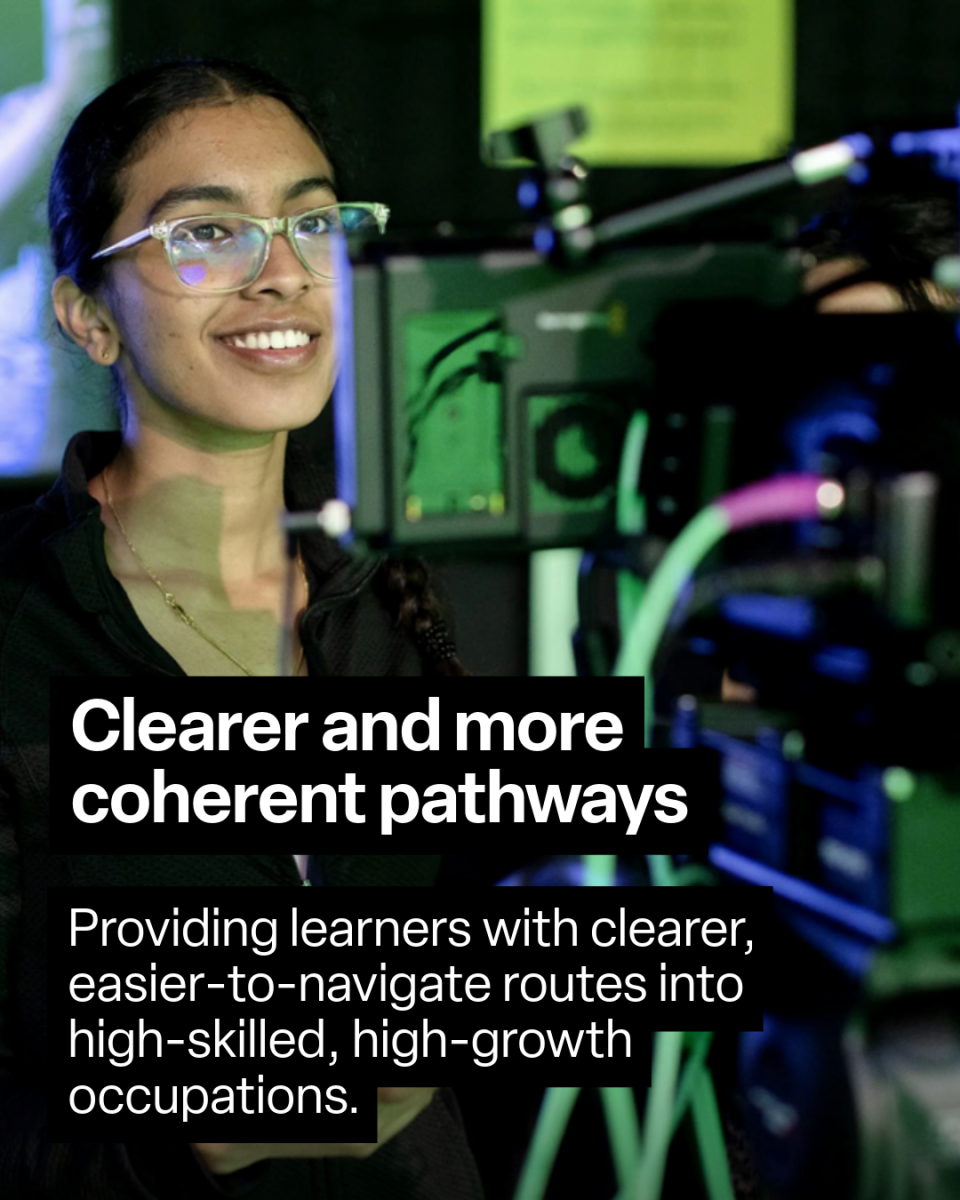
2. A coordinated approach to careers and pathways: Providing a single source of truth for learners, improving understanding of both academic and technical routes and supporting informed choices.
3. Employer voice embedded throughout the system: Moving to a more systematic, region-wide approach to employer involvement in curriculum design, delivery and progression.
4. Flexible, modular pathways across institutions: Enabling learners to move between colleges and universities, build skills over time, and access short, industry-aligned learning.
The recommendations are designed to support Greater Manchester's ambitions for good growth by helping learners access opportunities in key sectors while ensuring employers can recruit and retain the talent they need.
They are closely aligned with the overarching priorities of the LSIP, ensuring that post-16 education and training provision responds effectively to local skills needs. In particular, the recommendations address employer-identified challenges around increasing employer engagement with the skills system and training uptake, and enhancing careers education, information, advice and guidance (IAG).
As set out in the report, learners currently face disjointed pathways and unclear progression routes, particularly for non-traditional Level 6 options; curriculum can struggle to keep pace with rapidly changing employer skills needs; data is inconsistent and disconnected, limiting system-wide insight; and alternative pathways at Levels 4 and 5 remain small in scale.
At the same time, analysis shows strong foundations to build on. University enrolments in priority sectors have grown 29% since 2019/20 and an average of 40% of graduates remain in city region 鈥� retaining more Greater Manchester graduates than any other region attracts. These graduates go on to secure full-time employment within 15 months of graduation.
Nicola McLeod, Director of Education, Work and Skills at Greater Manchester Combined Authority, said:聽鈥淕reater Manchester has a clear ambition: we want residents to gain the skills they need to move into good jobs, while supporting employers聽to build the workforce they need to grow.聽
鈥淭his report reflects聽Greater Manchester聽at its best, bringing together employers, colleges,聽universities聽and partners behind a shared vision for how we develop the skills, education and training our city region needs.聽聽
鈥淏y聽listening to what businesses need聽and acting on the same evidence, we can align learning with聽real jobs, give residents clearer routes into聽good careers and ensure聽even聽more people聽benefit聽from the opportunities being created across our city region.鈥澛�
Emma Holt, President and in-coming CEO of Greater Manchester Chamber of Commerce said: 鈥淕reater Manchester Chamber of Commerce is delighted to be a partner in this important piece of work. As the Employer Representative Body for the region鈥檚 Local Skills Improvement Plan, we are acutely aware of the skills challenges businesses and employers face, and the need for continued action to solve these issues, which is fundamental to the prosperity of the city region.
鈥淭his report is another example of collaboration between key stakeholders, and, aligning with the Local Skills Improvement Plan, includes the systematic embedding of the employer voice as a core recommendation.鈥�